
Simon Donnelly
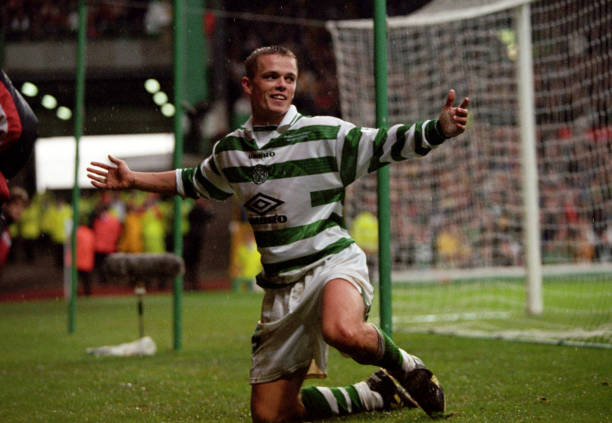
– An Extensive Biography
Early Life and Background
Simon Donnelly was born on 1 December 1974 in Glasgow, Scotland, and grew up during a period when Celtic were striving to reclaim domestic dominance. A naturally gifted footballer from a young age, Donnelly combined technical skill, creativity, and intelligence, qualities that would later define his career.
He came through Celtic’s youth system, emerging at a time when producing homegrown talent was becoming increasingly important for the club. From early on, coaches recognised his footballing brain as much as his ability on the ball.
Celtic Breakthrough (1993–1997)
Donnelly made his first-team debut for Celtic in 1993, quickly establishing himself as an exciting and versatile attacking player. Comfortable as a wide midfielder, winger, or forward, he brought flair and unpredictability to the side.
One of the defining moments of his early career came in the 1995 Scottish Cup Final, where Donnelly scored in Celtic’s famous victory over Rangers, ending a six-year trophy drought. That goal cemented his place in Celtic folklore and marked him out as a player for big occasions.
Rise to Prominence and Peak Celtic Years (1997–2000)
As Celtic rebuilt in the late 1990s, Donnelly became an important squad member during a successful period under managers including Wim Jansen and Martin O’Neill.
Honours with Celtic include:
Scottish League titles
Scottish Cups
Scottish League Cups
He was part of the squad that stopped Rangers’ 10-in-a-row ambitions in 1997–98, a season of huge historical importance to the club.
Playing Style and Strengths
Simon Donnelly was known for:
Close control and dribbling
Creative passing
Intelligent movement
Versatility across attacking positions
Composure in high-pressure matches
He was not an explosive winger in the traditional sense, but his football intelligence and technique allowed him to influence games subtly and effectively.
Injury Challenges
Donnelly’s career was repeatedly disrupted by serious knee injuries, which ultimately prevented him from fulfilling his full potential. These setbacks limited his consistency and reduced his opportunities during what should have been his peak years.
Despite this, he remained highly regarded within the game for his professionalism and determination to return from long rehabilitation periods.
Later Club Career
After leaving Celtic in 2000, Donnelly continued his career with several Scottish clubs, including:
Dunfermline Athletic
Partick Thistle
Heart of Midlothian
Clydebank
Though injuries continued to affect him, he remained a technically gifted and intelligent player, often used as a creative influence and mentor for younger teammates.
Scotland International Career
Simon Donnelly earned caps for the Scotland national team, scoring at international level and representing his country during the late 1990s. While his international career was relatively short, he was considered one of the more technically refined Scottish attackers of his generation.
Retirement from Playing
Donnelly retired from professional football in the mid-2000s, with injuries playing a significant role in his decision. His retirement was viewed by many as the premature end of a career that, with better fortune physically, could have reached even greater heights.
Media Career and Punditry
Since retiring, Simon Donnelly has established himself as a respected football pundit and media personality. Known for his:
Articulate analysis
Tactical understanding
Calm, thoughtful delivery
Honest insight into the modern game
He regularly appears on radio and television, particularly in Scottish football coverage, where his perspective as a former top-level player adds depth and credibility.
Personal Qualities
Away from the pitch, Donnelly is widely regarded as:
Intelligent and reflective
Grounded and approachable
Passionate about Scottish football
Open about the physical and mental challenges of professional sport
His willingness to discuss the realities of injury, pressure, and expectation has resonated with fans and younger players alike.
Legacy
Simon Donnelly’s legacy rests on:
Being a key figure in Celtic’s mid-to-late 1990s revival
Scoring one of the most important goals in modern Celtic history
Representing a generation of technically gifted Scottish players
Transitioning successfully into respected football media work
While injuries limited his longevity, his impact — particularly in defining moments — ensures his place in Celtic history.