
Shaun Maloney
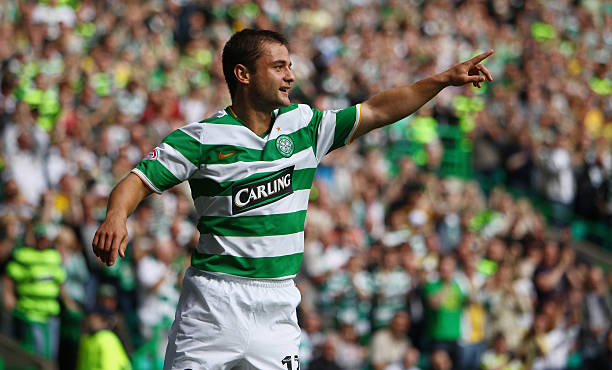
– An Extensive Biography
Early Life and Background
Shaun Richard Maloney was born on 24 January 1983 in Miri, Sarawak, Malaysia, where his Scottish father was working at the time. He was raised in Scotland and developed his footballing identity there, quickly gaining a reputation as a naturally gifted, technically refined attacker.
Small in stature but rich in ability, Maloney stood out for his balance, intelligence, and creativity, traits that would define both his playing and coaching careers.
Celtic Youth Academy and Breakthrough
Maloney joined Celtic’s youth academy and rose rapidly through the ranks. He made his first-team debut in 2001, during a period when Celtic were competing consistently at the highest domestic and European levels.
His early years were spent learning under experienced professionals, but his talent was never in doubt. When given opportunities, he impressed with fearless attacking play and a mature understanding of space.
Celtic Playing Career (2001–2007, 2008–2010)
Shaun Maloney enjoyed two spells at Celtic, contributing to one of the club’s most successful modern eras.
Major honours with Celtic:
4 Scottish League titles
2 Scottish Cups
2 Scottish League Cups
UEFA Cup Finalist (2003)
European Nights and Iconic Moments
Maloney is particularly remembered for his performances in European competition, where his technical quality shone against elite opposition. His goals and assists in the UEFA Champions League — including decisive strikes against top European sides — earned him admiration well beyond Scotland.
One of his most famous moments came in the 2006–07 Champions League, where his creativity and composure proved decisive in key group-stage matches.
Playing Style and Strengths
Maloney was known for:
Exceptional close control
Intelligent movement between lines
Creativity and vision
Set-piece excellence
Ability to score crucial goals
Often deployed as a winger or attacking midfielder, he thrived in tight spaces and was especially effective against well-organised defences.
Move to Aston Villa and Return to Celtic
In 2007, Maloney moved to Aston Villa in the English Premier League. While opportunities were limited, the experience helped broaden his tactical understanding.
He returned to Celtic in 2008, where he enjoyed a productive second spell before seeking regular first-team football elsewhere.
Wigan Athletic and FA Cup Glory
In 2011, Maloney joined Wigan Athletic, a move that would define the latter part of his playing career.
FA Cup Triumph (2013)
Maloney captained Wigan to a historic FA Cup victory in 2013, defeating Manchester City in the final. His leadership, composure, and intelligence were central to one of the greatest upsets in English football history.
This achievement cemented his reputation as a leader capable of performing on the biggest stage.
Later Club Career
Maloney later played for:
Chicago Fire (MLS)
Hull City
While injuries increasingly affected his availability, he remained valued for experience, leadership, and tactical intelligence.
Scotland International Career
Shaun Maloney earned 47 caps for the Scotland national team, scoring 7 goals.
He represented Scotland across multiple qualification campaigns and was often one of the few creative outlets in challenging periods for the national side. His commitment and consistency earned him widespread respect.
Injuries and Adaptation
Maloney’s career was frequently disrupted by injury setbacks, particularly muscular and ankle issues. Rather than diminishing his influence, these challenges accelerated his transition toward a more intellectual, leadership-driven role on the pitch.
Retirement and Coaching Pathway
Maloney retired from professional football in 2017 and immediately moved into coaching.
He joined the Belgian national team coaching staff, working under Roberto Martínez and playing a role in Belgium’s rise to world number one in FIFA rankings. His exposure to elite international coaching environments significantly shaped his football philosophy.
Management Career
Maloney later became manager of Hibernian, where he sought to implement:
A possession-based philosophy
Tactical flexibility
Emphasis on player development
Modern coaching principles
While results were mixed, he earned praise for bravery, clarity of ideas, and long-term vision.
Coaching Philosophy
Shaun Maloney is known for:
Modern tactical thinking
Emphasis on intelligence over physicality
Structured possession
Player education and development
Calm, articulate leadership
He is widely viewed as part of a new generation of progressive Scottish coaches influenced by European methodologies.